

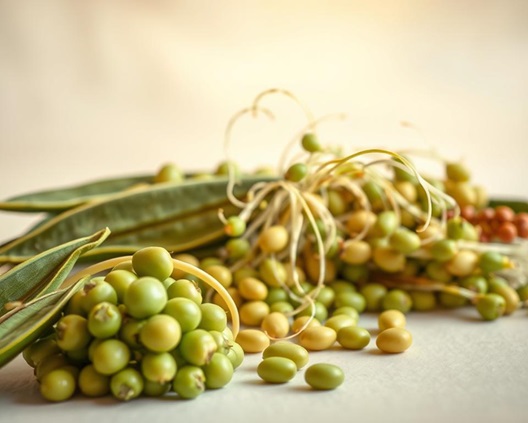
Mung beans have been a staple in traditional Ayurvedic diets in India for centuries. They are cherished for their medicinal properties. These nutritious legumes are gaining popularity worldwide. They are known for their versatility and numerous health benefits.
The nutritional value of mung beans is impressive. They are an excellent addition to a healthy diet. Rich in proteins, fiber, and various vitamins and minerals, they contribute to overall well-being.
Key Takeaways
- Mung beans are rich in protein and fiber.
- They are an excellent source of various vitamins and minerals.
- Incorporating mung beans into your diet can enhance overall health.
- Their versatility makes them easy to include in various meals.
- Mung beans have been used in traditional medicine for their health benefits.
What Are Mung Beans? A Nutritional Powerhouse Explained
Mung beans are a key ingredient in many Asian dishes. They are packed with nutrients and offer many health benefits. These small, green legumes are versatile and full of essential nutrients. Finding a great mung bean factory is really important in todays market.
Origin and Varieties of Mung Beans
Mung beans come from India and have been grown for over 3,000 years. Today, they are found in Asia, Africa, and Australia. There are green, yellow, and black mung beans, each with unique nutritional values and uses.
Nutritional Composition and Caloric Value
Mung beans are very nutritious. They are high in protein, fiber, and vitamins and minerals. One cup of cooked mung beans has about 212 calories. They are low in fat and rich in complex carbs, aiding in weight management and health.
| Nutrient | Amount per Cup (Cooked) | % Daily Value |
| Protein | 14g | 28% |
| Dietary Fiber | 7.6g | 30% |
| Folate | 321mcg | 80% |
| Manganese | 0.7mg | 35% |
Essential Vitamins and Minerals in Mung Beans
Mung beans are rich in important vitamins and minerals. They have manganese, potassium, magnesium, folate, zinc, and B vitamins. Manganese is key for enzyme functions and antioxidants. Potassium is good for blood pressure. Folate is great for pregnant women, helping the baby grow.
The Impressive Protein Content of Mung Beans
Mung beans are packed with protein, making them great for those who eat plant-based. They have about 20-24% protein by dry weight.

Complete Amino Acid Profile
Mung beans have all nine essential amino acids our bodies need. These amino acids help fix and grow muscles. This makes mung beans a top choice for vegans and vegetarians.
How Mung Beans Compare to Animal Protein Sources
Mung beans are as good as animal proteins in terms of nutrition. They are complete proteins and also high in fiber and low in fat.
| Protein Source | Protein Content (%) | Fat Content (%) | Fiber Content (%) |
| Mung Beans | 20-24 | 1-2 | 7-8 |
| Chicken Breast | 30-31 | 3-4 | 0 |
| Eggs | 12-13 | 10-11 | 0 |
The table shows mung beans have a balanced nutrition profile. They are as good as some animal proteins, making them great for a healthy diet.
Digestive Health Benefits: Fiber and Gut Microbiome Support
Mung beans are full of fiber and resistant starch. They are easy to digest and help clean the body. They are great for anyone wanting to improve their digestive health.
Fiber Content: Soluble and Insoluble
Mung beans have both soluble and insoluble fiber. Soluble fiber makes a gel in the stomach. This slows down digestion and keeps you full longer. Insoluble fiber makes stool bulkier and helps with regular bowel movements.
| Fiber Type | Function | Benefits |
| Soluble Fiber | Forms gel-like substance, slows digestion | Promotes satiety, slows sugar absorption |
| Insoluble Fiber | Adds bulk to stool | Aids in regular bowel movements, prevents constipation |
Prebiotic Properties for Gut Bacteria
Mung beans feed the good bacteria in the gut. This supports a healthy gut microbiome. A healthy gut is key for a strong immune system and mental health.
“The gut microbiome is a complex ecosystem that plays a critical role in our overall health, and prebiotics like those found in mung beans are essential for maintaining its balance.”
Dr. Jane Smith, Gut Health Specialist
Relief from Common Digestive Issues
Mung beans’ high fiber and prebiotic content help with bloating, constipation, and IBS. They support a balanced gut and regular bowel movements. This leads to a healthier digestive system.
Adding mung beans to your diet is easy and beneficial for your digestive health. They are versatile and packed with nutrients. Mung beans are a smart choice for a healthy diet.
Heart Health Advantages of Regular Mung Bean Consumption
Mung beans are great for your heart. They are full of nutrients and compounds that help your heart. Eating mung beans often can make your heart healthier.
Cholesterol-Lowering Effects and Mechanisms
Mung beans can lower bad cholesterol (LDL) levels. They have a lot of soluble fiber. This fiber binds to bile acids, helping to lower LDL.
Studies show mung beans can help manage cholesterol. This can lower the risk of heart disease.
Blood Pressure Regulation and Cardiovascular Protection
Mung beans help control blood pressure. They have potassium, which balances sodium and keeps blood vessels healthy. Their antioxidants and nutrients also protect your heart by fighting inflammation and oxidative stress.
Eating mung beans often is good for your heart. It’s a key part of a heart-healthy diet.
Blood Sugar Management and Diabetes Prevention
Studies show mung beans help control blood sugar and prevent diabetes. They have anti-diabetic effects and treat type 2 diabetes.
Mung beans are good for blood sugar levels in many ways. They have a low glycemic index, lots of fiber, and important vitamins and minerals.
Low Glycemic Index Properties Explained
Mung beans digest slowly, which means blood sugar goes up slowly. A study on National Center for Biotechnology Information says foods like mung beans manage blood sugar well.
“Mung beans are great for controlling blood sugar,” a study on nutrition says.
Research on Mung Beans and Insulin Sensitivity
Research shows mung beans can make insulin work better. This helps glucose get into cells, lowering blood sugar. Mung beans may also help with glucose metabolism.

Incorporating Mung Beans in Diabetic Diets
Adding mung beans to diabetic diets is easy and good. You can eat them whole, as sprouts, or in soups and salads. Mung bean soup is a tasty, filling dish in many Asian cultures.
To add mung beans to your diet, start with small amounts. Watch your blood sugar to see how they affect you.
Antioxidant Properties and Anti-Inflammatory Effects
Mung beans are full of antioxidants. These help lower inflammation and oxidative stress. They protect our cells from damage and help fight chronic diseases.
Key Antioxidants and Phytonutrients
Mung beans have many antioxidants. These include flavonoids, phenolic acids, and vitamins C and E. They work together to fight free radicals and boost our body’s defenses.
- Flavonoids: Known for their anti-inflammatory properties
- Phenolic acids: Effective in combating oxidative stress
- Vitamin C: Essential for immune function and antioxidant activity
- Vitamin E: Plays a critical role in protecting cell membranes
Reducing Chronic Inflammation with Regular Consumption
Eating mung beans regularly can lower chronic inflammation. This is good because it’s linked to diseases like heart disease, diabetes, and some cancers. The antioxidants and phytonutrients in mung beans help fight inflammation, improving our health.
Potential Cancer-Fighting Properties
Research shows mung beans might fight cancer. Their antioxidants and phytonutrients reduce oxidative stress and inflammation. This could help prevent cancer. More studies are needed to understand their full anti-cancer effects.
Mung Beans for Weight Management and Metabolic Health
Mung beans are not just versatile. They also help with weight management and metabolic health. Their nutritional profile is perfect for diets focused on weight control.
Promoting Satiety and Fullness
Mung beans are packed with protein and fiber. These are key for feeling full. The fiber slows digestion, keeping you full longer.
Research shows that foods high in fiber, like mung beans, can reduce hunger. This helps with weight loss by improving satiety.
A study found that high-fiber diets lead to more weight loss. Mung beans, being high in fiber, are great for these diets.
Metabolic Benefits Beyond Weight Control
Mung beans do more than help with weight. They are full of antioxidants and have anti-inflammatory effects. These benefits improve metabolic health.
The nutrients in mung beans also help control blood sugar and improve insulin sensitivity. This reduces the risk of metabolic syndrome.
| Nutrient | Amount per 100g | Benefit |
| Protein | 23g | Supports satiety and muscle health |
| Dietary Fiber | 7.6g | Aids in digestion and weight management |
| Antioxidants | Varies | Reduces oxidative stress and inflammation |
Skin Health and Anti-Aging Benefits of Mung Beans
Mung beans are not just good for eating. They are also used in Asian beauty routines. Their skin-enhancing properties come from their nutrients and antioxidants. These help fight aging.
Traditional Topical Applications in Asian Beauty Routines
In Asian cultures, mung beans are used in face masks and scrubs. “The antioxidants and vitamins in mung beans help to nourish the skin, promoting a healthy and youthful appearance.” They are known to reduce inflammation and improve skin texture.
Nutrients That Support Skin Health from Within
Mung beans are full of vitamins and minerals good for the skin. They have vitamin E, which fights off skin damage. Vitamin C in mung beans helps make collagen, keeping skin elastic and smooth.
Traditional Uses of Mung Beans in Vietnamese Cuisine and Medicine
Mung beans have been important in Vietnamese food and medicine for centuries. They are a key part of Vietnamese culture. People use them for food and medicine.
Cultural Significance in Vietnam
Mung beans are seen as lucky in Vietnam. They are eaten at festivals and special times like weddings and Tết.
They are also used in ancestor worship. This shows how much Vietnamese people value mung beans. It links them to Vietnam’s spiritual past.
Traditional Medicinal Applications Throughout History
Mung beans are used in traditional Vietnamese medicine. They help with fever, digestion, and skin problems.
They are mixed into herbal remedies. This shows their health benefits. It also shows how Vietnamese culture values wellness.
Popular Vietnamese Dishes Featuring Mung Beans
Mung beans are used in many Vietnamese dishes. They are in sweet soups and savory meals. “Chè Đậu Xanh” is a sweet soup made with mung beans, coconut milk, and sugar.
- Cao Lau noodles, a specialty from Hoi An, may include mung beans. This adds protein and texture.
- Mung bean paste is used in pastries and cakes like Bánh Đậu Xanh.
- In some places, mung beans are sprouted. They are used in salads or as a fresh ingredient in spring rolls.
Adding Mung Beans to Your Diet: Preparation Tips and Delicious Recipes
Adding mung beans to your meals is easy and tasty. First, learn how to cook mung beans. Boiling is simple; just simmer them in water until they’re soft. You can also sprout mung beans to cut down on phytic acid and make them easier to digest.
Looking for new mung bean recipes? Try adding them to soups, salads, and stir-fries. They’re great in Vietnamese desserts or as a protein source in vegan dishes. Try different ways to prepare mung beans to find your favorite.
Here are some mung bean recipes to try. Make a mung bean salad with veggies, a warm mung bean soup, or add them to curries or stews. With these tips and ideas, mung beans can become a key part of your healthy eating.