

You wake up. And within ten seconds, you know exactly what day it is.
Some people light a diya. Some sit with a cold cup of tea and an old photograph they’ve looked at a hundred times. And some people open their phone, find a cause that mattered to the person they lost, and feed a stranger in their name.
This post is about that last one. And why, of the three, it does something the others simply cannot.
More families now mark a death anniversary with food donation online. Not because it’s convenient. Because it feels right in a way that nothing else quite does. And if you’ve ever sat through that day wondering what to do with all that love that has nowhere to go, this might be exactly what you were looking for.
We look at why food carries such weight in grief traditions across the world, what brain science says about giving and healing, how donating on a birthday compares to a death anniversary donation, and how to set this up today in minutes.
Why Food? It’s the Oldest Memorial Offering in the World
Long before anyone had a donation platform, people were feeding others in the name of the dead. This isn’t a modern idea. It’s ancient.
Every culture has done this, in its own way
In Hindu tradition, shraddha rituals involve offering food to priests, the poor, and animals as nourishment for the departed soul’s journey. In Islam, sadaqah given on behalf of someone who has passed carries enormous spiritual merit. Christians around the world hold funeral meals and community feasts. Buddhist monks receive alms in memory of the deceased.
Across every continent, the instinct is identical. Feed someone. Do it in their name. Let that act carry meaning forward.
Why food specifically? Because it does what words cannot
Food is immediate. It is real. It disappears once consumed, which makes it a perfect symbol of impermanence. And it sustains life, which makes it a perfect symbol of love.
A flower at a grave is meaningful. A donation to a fund is meaningful. But food goes into someone’s body. It gives them energy to wake up tomorrow. That’s a direct, physical transfer of care, from the person who has gone, through you, to a stranger who needed it. There’s something quietly extraordinary about that chain.
Food is not just sustenance. It is memory made edible. Every meal donated in someone’s name carries their legacy into the body of someone who needed it most.
Modern giving brings this ancient practice to scale
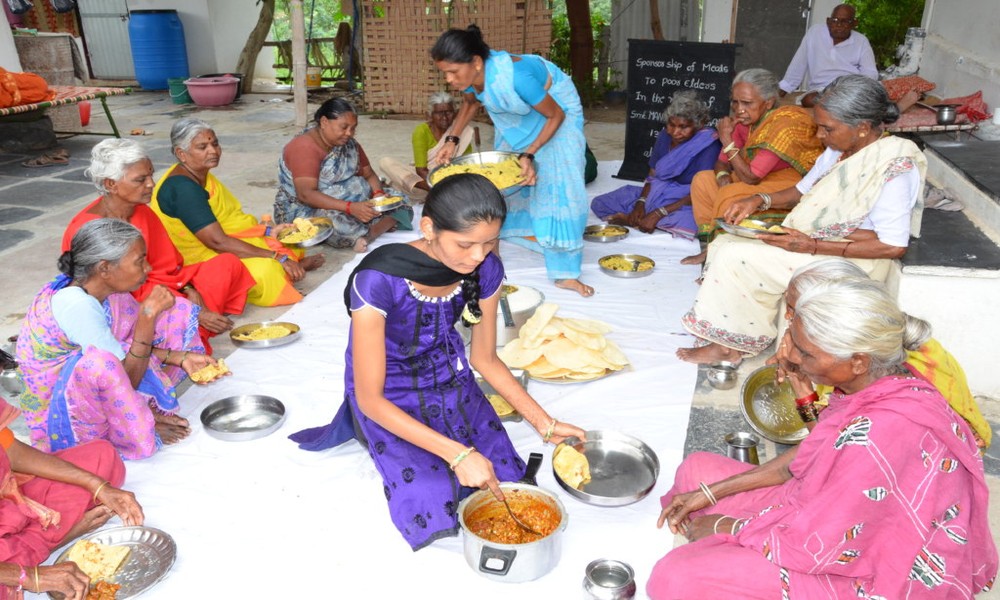
Food donation online removes geography from the equation entirely. You can fund fifty meals for a flood-affected family from your living room. Platforms that track impact show you exactly how far your tribute reached. One family’s grief becomes fifty families’ meals. The ancient tradition scales without losing its soul.
Before we talk about how to do it, it helps to understand why it works. Because the reason goes deeper than generosity.
The Grief Science Behind Giving: What the Research Actually Shows
Grief often creates helplessness. You couldn’t stop the loss. You can’t reverse it. That helplessness sits in the body as a kind of freeze. Purposeful action, especially action that visibly helps someone else, breaks it.
Your brain responds to giving the way it responds to good news
Your brain responds to giving the same way it responds to receiving good news. Dopamine releases. Serotonin rises. You feel something shift, not because grief disappears, but because something in your nervous system recognises that you did something real with it.
A 2024 survey by the Charities Aid Foundation found that 68% of people who made a memorial donation reported a stronger sense of connection to the person they lost. Not a vague sense of comfort. A genuine feeling of closeness. That’s the whole point.
Rituals create structure around painful dates
Researcher Dennis Klass, whose work on maintaining a healthy connection with the person you lost reshaped how grief counsellors approach bereavement, found that meaningful rituals help people grieve more healthily over time.
An annual food donation on a death anniversary is exactly that kind of ritual. It says: you still matter. Your values still move through me. And today I’m acting on them.
Community grief is lighter than private grief
When you share an online donation link with family and friends and say ‘join me today in feeding someone in her memory,’ something shifts. Grief that was private becomes shared. People who loved the same person act together. That collective moment matters more than the sum of its parts.
Grief is love with nowhere to go. Donating food gives it a destination.
So what does that look like in practice? More families now make giving part of their annual calendar. Some mark the birthday. Some mark the passing. Some mark both. Here’s how to think about that choice.
Death Anniversary Donation vs. Birthday Donation: When and Why Each One Works
You’ve probably seen the birthday fundraiser trend. Someone turns 40, skips the cake, and asks their friends to donate on their birthday instead. Meta reported that birthday fundraisers raised over five billion dollars globally by 2024. It’s a powerful act.
But the death anniversary donation is different in tone, in intent, and in what it does for the people involved. Here’s how to think about both.
| Feature | Donate on Birthday | Death Anniversary Donation |
|---|---|---|
| Emotional tone | Celebratory, hopeful | Reflective, purposeful |
| Intent | Celebrate a life lived | Honour a life’s end |
| Emotional trigger | Joy, gratitude | Grief, remembrance |
| Typical recipients | Child welfare, education | Food relief, community kitchen |
| Who participates | Friends, colleagues | Family, close ones |
| Frequency | Annual (birthday) | Annual (date of passing) |
Many families now do both. They donate on a birthday to celebrate the joy the person brought, and make a food donation online on the death anniversary as an act of remembrance and peace. Two moments. One living legacy.
You don’t need a campaign or a committee. Here’s how to do this in five steps, most of which take under two minutes.
7 Reasons Food Donation Is the Most Meaningful Death Anniversary Tribute
- It feeds the living in honour of the departed. You can’t bring them back. But you can send care forward in their name. That’s the most direct expression of ‘their memory lives on’ that exists.
- Food transcends religion, caste, and culture. It is the one gift no one refuses. A Hindu family, a Muslim orphanage, a Christian shelter, a secular food bank. Food works everywhere.
- It transforms a day of pain into a day of purpose. You move from grieving passively to giving actively. That shift matters more than it sounds.
- It is immediate and measurable. When you make a food donation online, you see exactly how many meals your tribute funded. Ten meals. Fifty meals. That specificity lands differently than a vague sense of doing good.
- It invites community. Share the online donation link and watch people who miss the same person come together around something real.
- It creates a living legacy. Repeated giving in someone’s name builds a story. A story that outlasts a gravestone and grows richer every year.
- It carries spiritual merit across traditions. From Hindu pind daan (an offering for the departed soul) to Islamic sadaqah jariyah (continuous charity), feeding others in a loved one’s name holds meaning across nearly every faith system.
Which of these hits closest? That’s your starting point.
How to Set Up a Food Donation Online in Someone’s Memory: Step by Step
Step 1: Choose a cause that reflects who they were
Think about what they cared about. Did they light up around children? Find an orphan feeding programme. Were they practical and community-minded? A local food bank or community kitchen. Did they believe in disaster relief? Many food donation online platforms let you direct funds to specific crises. It doesn’t have to be their profession. It just has to feel like them.
Step 2: Find a verified platform
Not all platforms are equal. When choosing where to make your online donation, look for four things: transparent reporting on how funds are used, a meal-count tracker, proper tax certification (80G in India, Gift Aid in the UK, 501(c)(3) in the US), and a clean track record. Platforms like Give India, Akshaya Patra, or international options like Action Against Hunger publish annual accounts and distribution records. Ten minutes here protects your donation and your trust.
Step 3: Personalise the tribute
Many platforms let you add a name, photograph, and a short memory note to your donation page. Use this. Write something real. It takes five minutes and it transforms the act from a transaction into the tribute it is.
Step 4: Share it
Send the online donation link to family and friends. A single WhatsApp message works. Something like: ‘Today is Dad’s third anniversary. I’m donating meals in his memory. Join me if you’d like.’ You don’t need a campaign. You need one honest message.
Step 5: Make it annual
Set a calendar reminder. Same date, every year. What starts as a one-time act becomes a tradition. Traditions become identity. And that’s how legacies actually survive.
Step 6: Bring your family into it
Not everyone will understand this immediately. Start without needing their buy-in. One donation, one year. Let the act speak. If your family is religious, connect it to the tradition they know. Send the link. Tell them the amount. Lower the friction as far as possible. Real acts attract real people.
Three minutes of your time feeds a family for a day. On the hardest day of the year, that’s three minutes remarkably well spent.
Real Families, Real Tributes: Stories That Started With One Decision
Note: The following are representative stories drawn from real patterns of memorial giving. Names have been changed to protect privacy.
The daughter who started a five-year tradition
Ananya lost her father in 2019. The first anniversary, she didn’t know what to do. She made a small food donation online to a local feeding trust in his name. About twenty meals.
The second year, she shared the link. Her mother, two siblings, and four of his old colleagues joined. Sixty-eight meals. The third year, 110 meals. She didn’t run a campaign. She just kept going. ‘It’s the one thing on that day that makes me feel like he’s still here,’ she said.
The family that marks both anniversaries
The Mehta family donates on his birthday every September to celebrate his love of cooking and people. On the January anniversary of his passing, they choose food relief for a community hit by seasonal hardship.
‘His birthday is about joy,’ his wife explains. ‘The anniversary is about peace. Both feel like him. Both keep us close to him.’
The WhatsApp group that became a giving community
Forty-three friends of a man called Vikram, who died unexpectedly at 38, formed a group the day after his funeral. Every year on his death anniversary, someone shares an online donation link. Everyone adds what they can. In four years, the group has funded over 2,000 meals in his name.
‘Vikram would have found this all very embarrassing,’ his best friend says. ‘He was terrible at accepting compliments. But he loved feeding people. So this feels exactly right.’
What would yours look like? One meal. One name. One date.
Know someone who might need to read this today? Send it to them.
Frequently Asked Questions
1. Is it appropriate to make an online donation instead of other rituals on a death anniversary?
Yes. A food donation doesn’t replace other rituals. It adds to them. Many families complete traditional religious rites in the morning and make an online donation in the afternoon. There’s no conflict. There’s only more love.
2. How do I know my food donation online actually reaches people in need?
Choose platforms with third-party audits, impact reports, and meal-count tracking. Legitimate organisations publish annual accounts and share updates from distribution days. If a platform cannot show you where your money went, find one that can.
3. What’s the difference between donating on a birthday vs. a death anniversary?
Donating on a birthday carries a celebratory tone. A death anniversary donation is reflective and acts as a ritual of continued remembrance. Both are meaningful. Many families choose to do both.
4. Can I set up a recurring annual donation in someone’s memory?
Most online donation platforms allow recurring giving. Set an annual donation that processes automatically on the same date each year. Set it up once. The tradition continues without you having to remember.
5. Is a food donation online tax-deductible?
In most countries, donations to registered charitable organisations qualify for tax deductions. In India, look for 80G certification (you receive a deduction on your taxable income). In the UK, check for Gift Aid eligibility (the charity reclaims tax on your gift). In the US, confirm 501(c)(3) status (you may deduct the gift). Keep your receipt.
6. How much should I donate? There’s no amount that feels right.
There’s no right number. Twenty meals or two thousand meals, the act carries the same intention. Start with what you can. The meaning is not in the amount. It’s in the decision to give at all.
Still have questions? Reach out to us directly. We’re here.
Their Memory Deserves More Than Silence. Let It Feed Someone.
The death anniversary doesn’t have to be a day you survive. It can be a day you act on.
One food donation online in someone’s name changes two things at once. It feeds a stranger who needed it. And it gives the love you’re carrying somewhere real to go.
You can make an online donation in minutes. You can share it with the people who miss the same person. You can mark both the birthday and the anniversary, every year, and watch something that started in loss grow into something that lasts.
Their name. Someone else’s meal. One moment of connection across the gap that loss creates. That’s what this is.
Feed someone in their memory today.
Or set up a recurring tribute that marks both their birthday and their death anniversary, every year, for as long as you want to keep their name alive.
Grief Is Love in Search of a Purpose. Give It One.
Loss is permanent. Its meaning is not.
Every death anniversary is a choice between enduring a painful date and transforming it. Food donation online makes the second choice immediate, real, and lasting. It connects old love to a present need. It keeps a name alive through action, not just memory.
Stop asking what they would have wanted. Ask what makes you feel close to them today. For a lot of people, the answer turns out to be this: find someone who is hungry, and feed them. In the name of someone who would have wanted exactly that.
Donate on their birthday. Make an online donation on the day they left. And watch what happens to grief when you give it somewhere to go.