

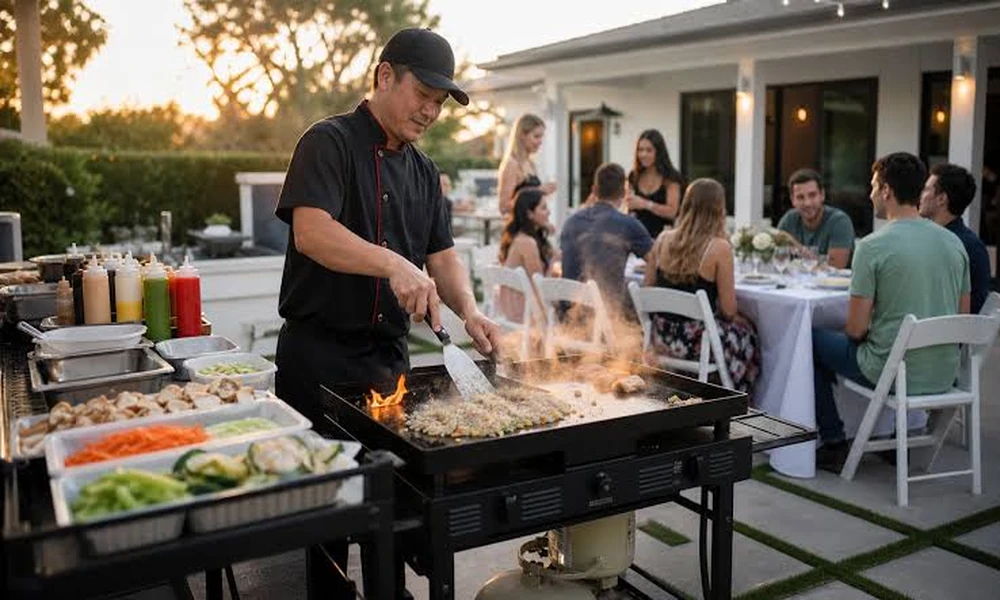
The table fits. The balloons are up. Then someone pulls out a chair, and the only route to the gate disappears. A backyard hibachi setup can look perfect in a photo and still be awkward to use.
Before the guests arrive, try these six checks with the furniture in place. The most useful changes are often a few inches and a moved drinks table.
Can the Chef Get From the Street to the Cooking Area?
Walk from the unloading spot to the proposed cooking area. Check the narrowest gate, any steps, and corners where equipment may be difficult to turn. Note uneven ground and anything that needs to be unlocked or moved before the chef arrives.
Take photographs from both ends of the route. Include parking instructions when discussing access with the caterer, especially if the street is busy or the driveway is shared.
Has the Chef Agreed to the Cooking Spot?
The chef should confirm the equipment footprint, suitable surfaces, and required clearances. Leave the proposed area open until you have agreed on the setup. An overhanging branch, low roof, or nearby decoration may affect where equipment can be positioned.
If you are planning a hibachi dinner at home, a quick sketch can help organise that conversation. Mark the entrance, cooking area, dining tables, and any fixed features. The sketch gives the caterer context for the photographs and helps you see where the space might become crowded.
Can Someone Leave the Table Without Moving Everyone Else?
Place seating so guests can reach the entrance and restroom without crossing the working area. Pull out an end chair and walk behind it. If someone has to stand up every time another person passes, shift the table before setting it.
For guests using mobility aids, ask what arrangement would make access comfortable. Check the route with the furniture in place, including any changes in level. Keep games and other activities away from the chef’s access route.
Is the Drinks Table Creating a Traffic Jam?
A drinks station needs room for someone to stop and pour while others walk past. Position it near the gathering area, with water easy to spot, and keep bags of ice and spare cups within reach without obstructing a path.
Give dessert its own small preparation space. Cake plates, candles, and serving utensils can stay together until dinner ends, leaving the drinks table available throughout the evening.
Does the Layout Work When You Actually Use It?
A short walkthrough can catch problems while they are easy to fix. Follow the unloading route, sit in an end seat, and carry a drink from the station to the table. Check that steps and paths will be visible after sunset.
Picture a guest refilling a glass while another carries a plate back to the table. If both have to squeeze behind the same chair, try moving the drinks station or a spare piece of furniture. Test the route together before deciding the setup is finished, keeping the cooking area agreed with the chef clear.
What Happens if the Weather Changes?
Ask the caterer what happens if wind or rain affects the setup. Have the caterer assess any proposed alternative cooking location in advance, including its ventilation and clearance requirements. Do not assume that moving equipment indoors or beneath a cover will be suitable.
Confirm where guests can wait comfortably while a decision is made, and keep one host available to coordinate the plan.
Once access, seating, and the weather plan are confirmed, stop rearranging and enjoy the gathering. A practical layout gives the chef room to work and your guests room to relax.